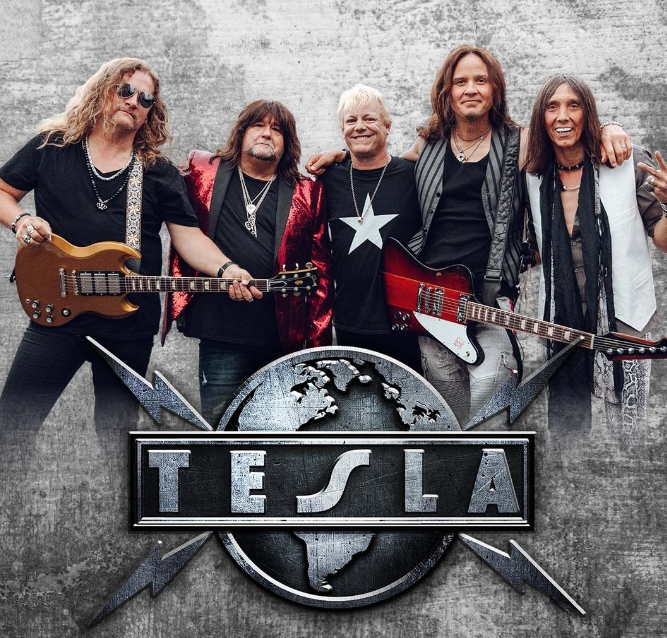
A blues-based hard rock band marked by clever songwriting and technical acumen, Tesla rose to fame during the pop-metal boom of the 1980s and early ’90s. The band’s music is equally indebted to contemporary blues and ’70s-style hard rock, a fusion that helped differentiate platinum-selling albums like Mechanical Resonance (1986), The Great Radio Controversy (1989), and Psychotic Supper (1991) from their contemporaries. Despite the refreshing lack of posturing, Tesla was hit just as hard as the rest of the metal world when grunge arrived in the early ’90s, resulting in a six-year hiatus before reuniting in the 2000s. Since then, the band has remained active, touring, and issuing studio albums like Forever More (2008), Simplicity (2014), and Shock (2019) that combine no-frills classic rock with bluesy pop-metal.
Although Tesla took shape in 1985 in Sacramento, California, the musicians (vocalist Jeff Keith, the underrated guitar tandem of Frank Hannon and Tommy Skeoch, bassist Brian Wheat, and drummer Troy Luccketta) had logged several years together under the name City Kidd. At their management’s suggestion, they renamed their group after the eccentric inventor Nikola Tesla, who pioneered the radio but was given only belated credit for doing so. After playing several showcases in Los Angeles, Tesla quickly scored a deal with Geffen and released the debut album Mechanical Resonance in 1986. It produced a minor hard rock hit in “Modern Day Cowboy,” reached the Top 40 on the album charts, and eventually went platinum. However, it was their 1989 follow-up effort, The Great Radio Controversy, that truly broke the band. The first single, “Heaven’s Trail (No Way Out),” was another hit with hard rock audiences and set the stage for a second single, a warm, comforting ballad named “Love Song” that substituted a dash of hippie utopianism for the usual power ballad histrionics. “Love Song” hit the pop Top Ten and pushed The Great Radio Controversy into the Top 20. Double-platinum sales figures followed as another single, “The Way It Is,” also enjoyed some degree of airplay.
(Source: Spotify)